
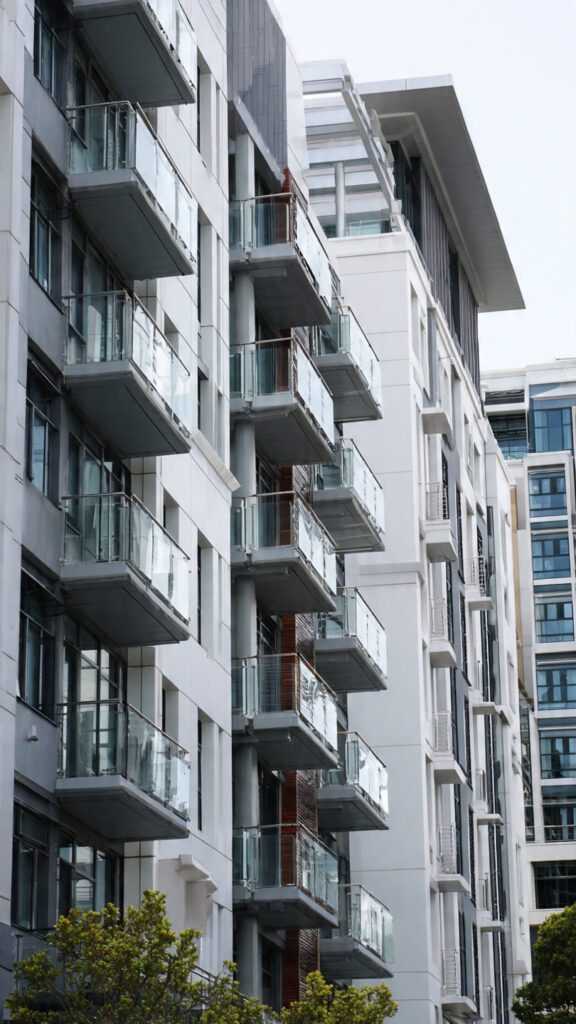
Aluminium Balustrade Safety Standards in South Africa
If you’re considering aluminium balustrades for a balcony, staircase, or pool area — whether residential or commercial — it pays to understand the regulatory requirements. At Accend Aluminium & Glass (serving Roodepoort and Randburg), we prioritise safety and compliance with South African building codes. This guide explains the key aluminium balustrade safety standards in South Africa, covering heights, load‑bearing, spacing, glazing, and installation — so your project stays compliant, safe, and inspection‑ready.
Why SANS Compliance Matters
In South Africa, building safety is regulated by the national building regulations and standards under SANS 10400 (and related parts). These regulations aim to prevent falls, structural failures, and hazards — particularly in elevated areas such as balconies, mezzanine floors, staircases, and pool edges. Using aluminium (and glass) does not exempt a developer or homeowner: the balustrade must still meet the same safety, design, and installation standards as any other material.
As a specialist in aluminium and glass balustrades, Accend Aluminium & Glass ensures every installation meets the relevant SANS requirements — giving you peace of mind, legal compliance, and long-term safety.
Minimum Height & Change-of-Level Requirements
One of the core requirements under SANS 10400‑D (Public Safety, Change in Level) is that any edge more than 1 metre above the adjacent floor or ground level must be protected by a balustrade or parapet wall of at least 1 metre height. Ndlambe Local Municipality+2Alsysco South Africa+2
For certain areas — such as around swimming pools or other higher-risk zones — a higher barrier is advisable or required. Many providers recommend a minimum of 1.2 metres in such cases. Aluminium Windows and Doors Randburg+2waldenaluminium.co.za+2
In the context of stairs or internal mezzanine floors, the requirements under SANS 10400-M apply: for staircases with more than a few risers, a balustrade or secure wall must be at least 1 metre high. Ndlambe Local Municipality+1
Thus, whether you’re building a balcony, mezzanine, internal landing or poolside barrier — the balustrade’s height must comply to avoid fall hazards and ensure legal adherence.
Load‑Bearing and Structural Design Specifications
Height alone isn’t enough — the balustrade must also be structurally strong. Under SANS 10160 (Structural Design for Buildings) — referenced by SANS 10400‑B — balustrades must be engineered to withstand the loads expected during normal use. steelstudio.co.za+2Aluminium Windows and Doors Randburg+2
For typical residential applications, a commonly adopted design spec is a line load of 0.5 kN/m along the balustrade, and a concentrated point load of 1 kN on a small area (e.g. where someone might lean or fall against the balustrade). Aluminium Windows and Doors Randburg
Where glass panels are used — as is often the case with aluminium-and-glass balustrades — the design must also consider impact resistance (e.g. human impact). For example, balustrade systems need to comply with human impact tests as specified under glass safety standards. Next Level Balustrading+1
Beyond raw load resistance, correct fixing and anchoring is crucial. Substandard fixing (e.g. weak pin‑fixings) may create pivot points or structural failure. Best practice — including for aluminium balustrades — is to use core‑drilled base‑plate fixings or chemically anchored base plates, or suitably engineered side‑fixings. Aluminium Windows and Doors Randburg+1
Balustrade Openings, Gaps and Glazing (for Aluminium + Glass)
Balustrades aren’t only about resisting loads — they must also prevent accidents from slipping through openings. Under SANS, balustrade openings must be designed such that a 100 mm diameter sphere cannot pass through. This standard protects especially children from climbing through or getting stuck.
When glass is used, the glazing must be safety‑glass (e.g. toughened or laminated), and meet relevant glazing standards. Many installations refer also to SANS 1263 (safety performance of glazing) — ensuring the glass performs under impact, and reduces risk of shattering.
For staircases, ramps, landings or balconies within 1.8 m of the stair pitch line, any glazed balustrade/wall must follow glazing safety requirements.
These standards ensure safety beyond falls — they also protect against glass breakage, preventing injuries.
Competent Design, Engineering Sign‑off & Certified Installation
Compliance doesn’t stop at design. Every balustrade — aluminium, steel or glass — must be designed and signed off by a structural engineer (often required when a drop is more than 1 metre).
Installation must use correct methods: base‑plate or chemically anchored fixings, core‑drilled pockets, or other approved fixing methods. Weak or improper fixings (e.g. small pin‑fixings) are inadequate and may lead to failure. Aluminium Windows and Doors Randburg+1
Finally, after installation, a certificate of compliance is often required by building inspectors — especially for multi‑storey or public‑occupancy buildings — confirming the balustrade meets load, height, gap and glazing standards.
At Accend Aluminium & Glass, we manage full design, engineering sign off, manufacture and installation — reducing the risk of non‑compliance and ensuring you pass municipal inspections.
Why Aluminium & Glass — and Why Choose Accend Aluminium & Glass in Roodepoort and Randburg
Aluminium balustrades (with or without glass infill) are ideal for modern homes and apartments: they’re lightweight, corrosion‑resistant, durable, and visually clean. When correctly engineered and fixed, aluminium performs just as reliably — if not better — than steel. As confirmed by local balustrade system providers such as those compliant with SANS and SANS 10160.
At Accend Aluminium & Glass we:
-
Provide full-service solutions — from design to installation — for clients in Roodepoort, Randburg and surrounding areas. Aluminium Windows and Doors Randburg
-
Use certified, SANS‑compliant components and follow correct installation practices (correct fixings, quality aluminium, safety glass where required). Aluminium Windows and Doors Randburg+1
-
Ensure professional engineering sign-off and compliance documentation — reducing risk during municipal inspections or future property sales.
Hence, choosing aluminium + glass doesn’t mean compromising safety — provided you let experts handle design and installation according to SANS regulations.
What You Risk if Balustrades Don’t Comply
Non‑compliant balustrades can lead to serious safety hazards: falls from balconies or staircases, glass breakage, structural failure — especially under load or impact.
Moreover, buildings may fail to pass municipal inspections or obtain occupation certificates. Often inspectors require compliance certificates from qualified structural engineers.
For homeowners: non‑compliant installations may reduce property resale value, risk legal liability, and threaten occupant safety.
Using a compliant, professional service (like Accend Aluminium & Glass) protects you — from safety risks, legal exposure, and unexpected retrofit costs.
Conclusion
Ensuring your aluminium balustrade meets South African safety standards is not optional — it is essential. Under SANS 10400 (and related standards such as SANS 10160, SANS 1263, SANS 10400-M), you must meet requirements for height, structural load capacity, gap/opening limitations, proper glazing (if glass), correct fixing and certified installation.
At Accend Aluminium & Glass, we deliver fully compliant aluminium and glass balustrade systems in Roodepoort and Randburg — combining aesthetics, durability and legal safety. For peace of mind and regulatory compliance, get in touch for a free consultation or quote.
References & Further Reading
-
Building regulations for aluminium balustrade installation (Accend Aluminium & Glass) Aluminium Windows and Doors Randburg
-
SANS 10400 – Part D: Change in level (public safety)
-
Alsysco Aluminium Balustrades: SANS‑compliant systems, glazing & safety info
-
Why structural design and load‑testing matter for balustrades (Steel Studio checklist)
-
Balustrades vs. pool enclosures — when higher barriers are required