
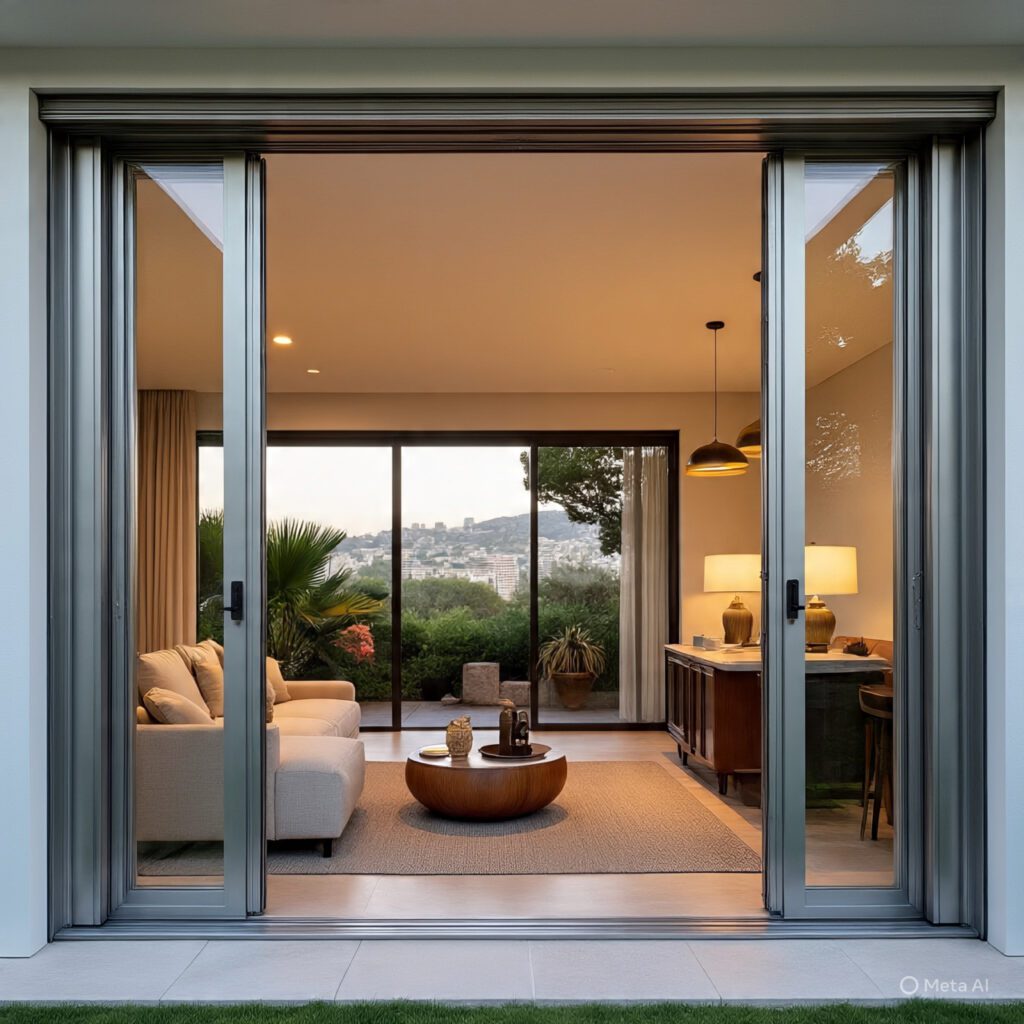
Aluminum Stacking Doors
In affluent suburbs like Houghton, Westcliff or Sandhurst, where clients demand a seamless connection between interior and exterior spaces, aluminum stacking doors are rapidly becoming a design staple. For Accend Aluminium & Glass (2AG) — based in Roodepoort and Randburg — positioning yourself as a premier supplier of high-end stacking and sliding glazing systems is both a powerful marketing message and a demonstration of technical mastery. In this blog post, I’ll explore the aesthetic, technical and lifestyle advantages of aluminum stacking doors, and how 2AG can leverage this “maximizing views” narrative to attract discerning homeowners and architects in Johannesburg’s premium residential nodes.
Why Aluminum Stacking Doors Are Ideal for Modern Johannesburg Homes
The Appeal of Panoramic Transparency
One of the defining features of “Camps Bay–style” architecture (or Cape-inspired modernism) is the emphasis on dramatic views, generous glass, and indoor-outdoor fluidity. In Johannesburg’s hilly and leafy suburbs, many plots offer vistas of cityscapes, wooded ravines, or skyline scenescapes that clients want to frame rather than hide. Aluminum stacking doors allow multiple glazed panels to slide and “stack” alongside or behind one another, opening up entire façades without visual interruption.
As Milgard describes, stacking glass doors are designed for “vast, uninterrupted views” while still offering robust operability and modern style. Milgard They deliver the feel of a glass wall that disappears, yet retains weather-sealing and structural integrity when closed.
Structural Elegance & Slim Sightlines
One of the competitive differentiators of aluminum profiling over wood or PVC is its superior strength-to-weight ratio. This allows for narrower profiles, slimmer mullions, and larger spans. The result: more glass, less aluminum. The more unobstructed your view, the better the selling point.
Equally important is the use of thermal breaks, gasketed seals, and high-performance glazing to prevent condensation, excessive heat gain or loss — ensuring that your stacking doors are not just beautiful, but also efficient.
Durability & Low Maintenance
Johannesburg’s climate includes intense sun, occasional hail, and seasonal temperature swings. Unlike timber, which can warp or swell, aluminum is dimensionally stable. It won’t twist or distort over time, even with large unit sizes. Regular maintenance is limited to periodic cleaning of tracks and seals.
This “install and forget” appeal is a strong marketing angle: high luxury aesthetic with low hassle.
Energy Performance & Comfort
Glazing does carry thermal implications, but modern stacking door systems mitigate this via Low-E coatings, argon fills, and thermally isolated frame design. Many premium stacking door systems globally (for example, as described by Andersen’s Big Doors moving glass systems) integrate advanced thermal controls and lift-slide mechanisms to balance performance and aesthetics. Andersen Windows
In other words: your glass walls can stay dramatic but still deliver comfort and energy efficiency in our South African climate.
Design Strategies for “Maximizing Views” in Houghton / Westcliff Contexts
Orientation & Solar Control
A glass wall without sun-control is a liability — in Summer, unchecked solar gain becomes a furnace. When specifying stacking door configurations, consider:
-
Overhangs, soffits or pergola-style shading above the doors
-
Solar-control glazing (Low-E, spectrally selective)
-
Operable external louvers or blinds
This allows a client to enjoy the views without overheating.
Floor Threshold & Accessibility
Many clients insist on flush or minimal thresholds for an unbroken indoor–outdoor flow. Wheelchair-accessible, low-profile threshold systems should be specified. Make sure your stacking door systems offer a “zero-line” or low-sill option to avoid a barrier in the floor plane.
Thermal & Acoustics Zoning
In multi-zone homes (living, dining, entertainment), you can zone your stacking doors. For example, panels that are seldom moved can be fixed-glazed or semi-permanent, while more trafficked segments use operable stacking doors. In this way, you reduce the number of moving parts while maximizing glazed area. Also, prioritize glazing packages that offer decent sound attenuation — urban Johannesburg noise pollution is nontrivial.
Module Sizes & Panel Geometry
Work with the architect to design modular panel widths that can be managed operably by human users (e.g., no panel heavier than ~80 kg). Use strike configurations that stack neatly and minimize exposed frame width. Offer corner stacking (pivot-stack or 90° stacking) where two facades meet, to exploit double-aspect views.
Integration with Other Aluminum Systems
As a full-service aluminum & glass company, 2AG already offers windows, folding doors, garage doors, etc. (see https://2ag.co.za/aluminium-windows/). 2ag.co.za. We package stacking door systems together with matching window lines, bi-fold doors, or sliding systems to achieve visual consistency and cross-sell advantages. For installation methods contact us on https://2ag.co.za/aluminium-glass-supplier-roodepoort/) 2ag.co.za
Conclusion
For the discerning homeowner in Johannesburg’s elite suburbs, the dream is clear: walls that vanish, glass that frames vistas, and spaces that flow effortlessly from indoor to outdoor. Aluminum stacking doors are the ideal medium to realize that dream. For Accend Aluminium & Glass (2AG), positioning yourself as the stacker door specialist — backed by technical competence, strong project visuals, and authoritative content — will elevate your brand in the competitive Johannesburg home-improvement market.