
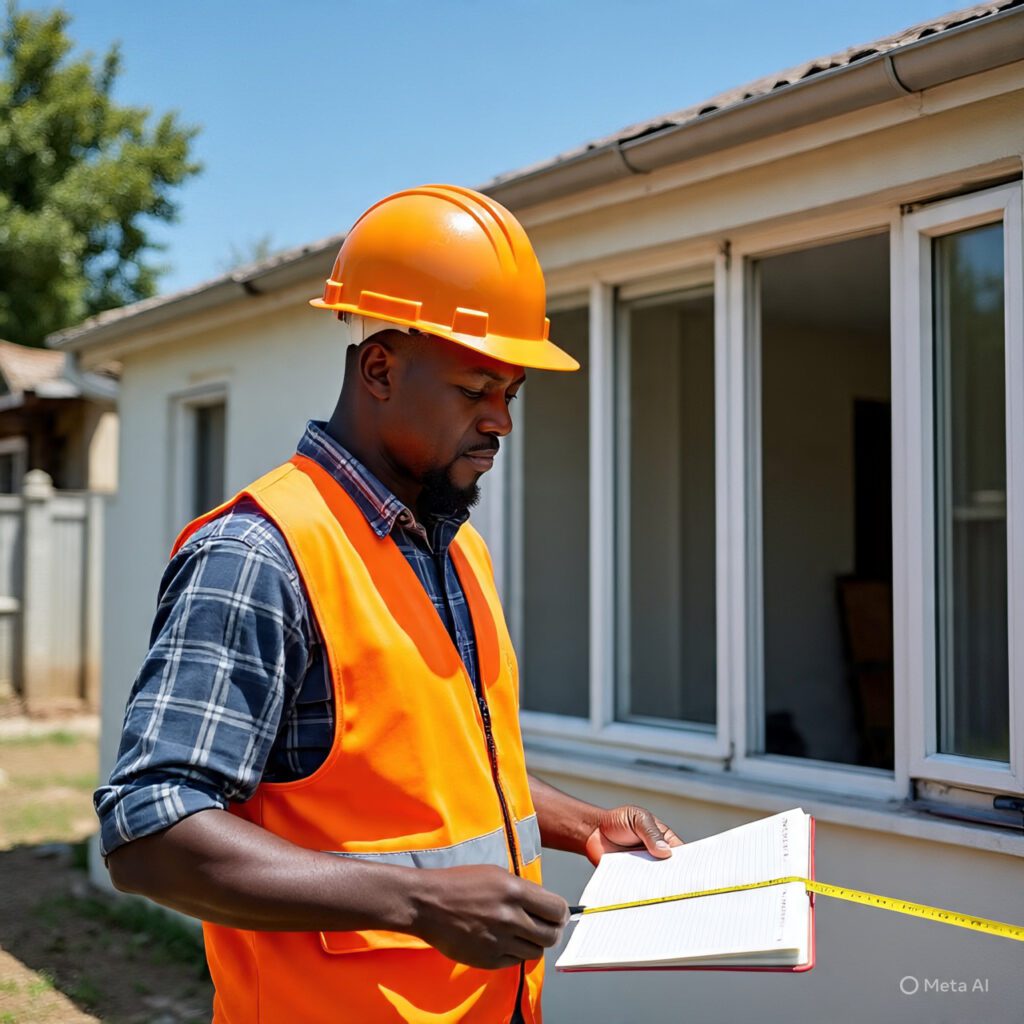
Aluminium Window & Door Replacements
When considering replacement aluminium windows or doors, precise measurement is critical. Getting it wrong can lead to misfits, extra cost, delays, reduced energy efficiency, or water leaks. At Accend Aluminium & Glass, we believe in doing it right from the start. Below is a comprehensive guide to measuring for aluminium window and door replacements, tailored to South African conditions and what we deliver in Roodepoort & Randburg.
Why Accurate Measurement Matters
Accurate measurements ensure:
-
The new window or door fits seamlessly into the existing structural opening.
-
Proper sealing, insulation, and weatherproofing (especially as rain and wind can exploit even small gaps).
-
Good functional operation (windows that open/close smoothly, doors that don’t rub or warp).
-
Aesthetic integrity — alignment with walls, frames, joinery, and other surfaces.
-
Cost control: avoids rework, modifications, or ordering incorrect sizes.
At Accend Aluminium & Glass, our process starts with detailed site assessment, precise measurements, quality fabrication, and professional installation. 2AG Also, in “Mistakes to avoid when installing aluminium windows”, we emphasise that frame dimensions will be slightly larger than the wall opening to allow for sealing and adjustments. 2AG
Preparations Before Measuring
Before you take any measurements:
-
Clean up the area around the opening. Remove old trims or obstruction if possible to expose the true opening.
-
Have the necessary tools ready: a reliable steel tape measure (metric), spirit level, straight edge or square, notepad or measurement app, ladder if needed, helper to assist.
-
Determine if the frame is being replaced full‐frame (including jambs) or only the glazing/sash. This impacts how far you measure out or in.
-
Note whether the surrounding finishes (wall, floor, ceiling, sill, threshold) are final or still to be installed. Flooring or finishes not yet installed will affect height/depth calculations.
How to Measure Windows for Replacement
Below is the step‐by‐step for measuring existing window openings when replacing windows with aluminium frames.
Step 1: Measure Width (Horizontal)
Measure the width at three vertical levels:
-
Top (from jamb to jamb)
-
Middle
-
Bottom (or sill)
Take the smallest of the three – this ensures the frame will fit in the narrowest part of the opening. Add a little tolerance if required by the system (for sealant, adjustment).
Step 2: Measure Height (Vertical)
Similarly, measure height at three horizontal positions:
-
Left side (from sill to head)
-
Middle
-
Right side
Again, use the smallest measurement. If the sill or head is uneven or warped, note that.
Step 3: Measure Depth
Depth (the thickness of the opening) often gets overlooked. You need to ensure the depth of the existing reveal (wall opening) can accommodate the full frame, including any glazing bead, frame profile, weather seals.
Also check whether the window will sit flush with internal walls, or project; this matters for aesthetics and finishing (plaster, skirting, lintels).
How to Measure Doors for Replacement
Replacing aluminium doors (single, double, sliding, or hinged) requires a similar but slightly different approach.
-
Width: Measure the rough opening from one side jamb to the other, at top, middle, bottom if possible. Again use smallest.
-
Height: Measure from the threshold (floor or sill) up to the head jamb (top horizontal piece). If flooring is not yet finished, note the final floor height or planned finish.
-
Depth / Frame Reveal: As with windows, ensure there’s enough depth in the wall opening for the door frame plus clearance for hinges, locks, and sealants.
If the door includes transoms or sidelights, measure carefully each component. Also note swing direction, clearance, and whether external/preexisting elements like steps, patios, or decks will affect fitting.
Additional Considerations & Local Specifics for Accend’s Region
Since Accend Aluminium & Glass operates in the Roodepoort & Randburg area, there are a few local factors to keep in mind:
-
Weather proofing & sealing: Gauteng’s seasonal rains and possible hail mean that frames must be precise. The allowances built in for sealing (e.g. frame slightly larger than rough wall opening) per Accend’s process are important. 2AG
-
Thermal movement: Aluminium expands and contracts with temperature shifts. Ensure small tolerances are provided in measurements for expansion (especially in large windows/doors).
-
Building regulations & safety glass: When replacing windows or doors, local building codes may require safety glass, certain egress widths, or structural lintels. Ensure measured sizes reflect compliance.
-
Finish levels: Floors or plastering may not be finished. When measuring door heights or sills, account for future finish height.
Steps Accend Aluminium & Glass Recommends
Here is a refined process that Accend uses, which customers should follow to avoid measurement errors:
-
Site assessment: Visit site to inspect the existing window/door openings. Note any irregularities or damage.
-
Measure three points (for width, height, depth) and record them clearly. Always use the smallest measurement as basis.
-
Check squareness, level, and plumb: Use a level or square to see if frame opening is square. If not, note deviations; may need corrections or adjustments.
-
Allow tolerances for frame manufacturer: Accend’s manufacturing tolerances should be known (these are often small, but they matter).
-
Confirm final height and width after finishes: If flooring, plaster, external finishes are not complete, measure final expected levels.
-
Double check all measurements before placing the order. Better to re‐measure with someone else verifying.
How to Record and Communicate Measurements
For clarity and to avoid mistakes:
-
Use a standard form or template (window/door name or location, width, height, depth, notes).
-
Mark each measurement with its location (e.g. “Kitchen east window – width top / mid / bottom; height left / centre / right”).
-
Attach a sketch or photo of each opening with arrows showing where measurements were taken.
-
Indicate where there are drywall instead of jambs, unfinished wall edges, or non‐square corners.
When you submit measurements to Accend Aluminium & Glass, providing all this detail helps ensure your quote and eventual fabrication are accurate and that fitting goes smoothly.
Global Best Practices & References
To put this in context globally, here are a couple of authoritative guides you can compare with, to see similar measurement methods:
-
Milgard provides detailed guidelines for measuring replacement windows – taking three width and height measurements and using the smallest. Milgard
-
Marvin also has a guide on measuring for replacement windows and doors, emphasising inner‐edge jamb measurements, threshold to head stock heights, and verification before ordering. Marvin
Common Mistakes to Avoid
-
Measuring only once. Even small variations between top, middle, bottom can result in misfits.
-
Ignoring depth and existing frame external/internal clearances.
-
Forgetting floor finish level changes (tile, wood, carpet) which will change the height.
-
Overlooking jambs / drywall vs structural frame differences in measuring surfaces.
-
Assuming all windows/doors in one house are identical in size. Many older homes have settled, walls shifted, or windows installed differently.
Summary & What to Do Next
If you’re considering replacing aluminium windows or doors with Accend Aluminium & Glass in Roodepoort or Randburg:
-
Take multiple measurements (width, height, depth) in each opening, always using the smallest reading.
-
Inspect and record any irregularities (non-square corners, uneven surfaces, unfinished floors).
-
Use the measurements, sketches/photos, and notes to obtain a quote. Accend can then verify onsite before production.
-
Confirm finishes and whether thresholds/sills/floors are final or still to be done.
With careful measurement, your replacement aluminium windows and doors will fit well, look great, perform efficiently, and last for many years.